Bedding · Materials & Sleep
Natural Latex Organic Mattresses: What to Know About Support and Materials
A considered guide to the buoyant feel, layered construction, and material claims behind natural latex mattresses—and how to decide whether one belongs in your bedroom.
Published October 26, 2026
Some mattresses seem to invite you down into them; others meet the body with a more immediate, spring-like response. Natural latex is often associated with the latter: a gently buoyant surface that can contour around pressure points without the pronounced sinking sensation some people experience with softer foams. Its appeal is as much about feel as it is about the story of the materials—where they come from, how they are processed, and what a certification actually verifies.
That story deserves a closer look. “Natural,” “organic,” and “latex” are not interchangeable guarantees, and the word support means more than firmness. A mattress must work in concert with a person’s body, sleeping position, preferences, and bed foundation. Understanding the layers and labels can make comparison more useful, and keep an attractive materials narrative from becoming a substitute for practical questions.
This guide unpacks the basics: what natural latex is, how it is made into mattress components, what different constructions can feel like, and how to weigh breathability, certifications, and care. The aim is not to crown one mattress type as universally superior, but to help you identify the details that matter to your own sleep.
What is natural latex?
Natural latex begins as a milky fluid harvested from rubber trees, most commonly Hevea brasiliensis. The fluid is processed and formed into a resilient material that can be used in mattress layers. In a finished mattress, latex may serve as a comfort layer near the surface, a thicker support component, or part of a construction that also includes other materials.
It is useful to distinguish natural latex from synthetic latex and blends. Synthetic latex is made from petrochemical feedstocks; a blend may combine natural and synthetic latex in varying proportions. A product described simply as “latex” does not, by that word alone, tell you which kind it contains. Ask for the material breakdown and look for documentation that clarifies the composition.
Likewise, “natural latex” does not automatically mean that every component of a mattress is natural or organic. A mattress includes more than its latex core: the cover, quilting, fire barrier, adhesives, and any additional foam or fiber layers also contribute to its overall construction. A careful materials description names these components rather than letting one appealing ingredient stand in for the whole.
The feel: buoyant, responsive, and individual
Many sleepers describe latex as responsive. When you shift position, the surface tends to respond promptly rather than retaining a slow, deep impression. That quality can make turning feel easier for some people, while others may prefer the closer, more enveloping sensation associated with different foam constructions. Neither response is inherently better; comfort is personal, and the same mattress can feel quite different depending on body shape, weight distribution, and the layers above or beneath the latex.
Latex can contour without feeling as though the body is sinking deeply into the bed. This distinction matters to people who want some cushioning at the shoulders or hips but still prefer a surface that feels lively and easy to move across. Yet it should not be assumed that every latex mattress has the same degree of contour, bounce, or firmness. Thickness, formulation, layer arrangement, and the design of the mattress all influence the sensation.
Firmness labels are best treated as rough descriptions, not universal measurements. One brand’s “medium” may feel firmer or softer than another’s, and a mattress that feels supportive to one sleeper might create uncomfortable pressure for someone else. If possible, test the bed in your usual sleeping position, allow enough time to notice pressure and alignment, and review the trial and return terms before making a decision.
Support is not simply firmness
In mattress language, support refers to how well a sleep surface accommodates the body while helping it remain in a comfortable, well-aligned position. Firmness describes the sensation at the surface. The terms are related, but they are not synonymous: a very firm mattress can still feel uncomfortable or fail to suit a particular body, while a softer surface can provide appropriate support when its construction and fit are right.
Sleeping position is one useful starting point. Side sleepers often pay attention to cushioning at the shoulders and hips, where pressure can build against a surface that feels too firm. Back sleepers may look for a balance between surface comfort and a steady, supported feel through the torso. Stomach sleepers commonly consider whether the surface allows the midsection to sink more than they find comfortable. These are broad considerations, not rules; body proportions, personal preference, and health needs all matter.
It can help to notice what happens over the course of a night rather than judging the mattress by its first impression. Do you wake with pressure or stiffness? Is it easy to change position? Does the surface feel comfortable in the position you actually sleep in? A mattress should not be expected to diagnose or treat pain. Persistent discomfort or sleep problems are best discussed with a qualified health professional.
How latex construction shapes comfort
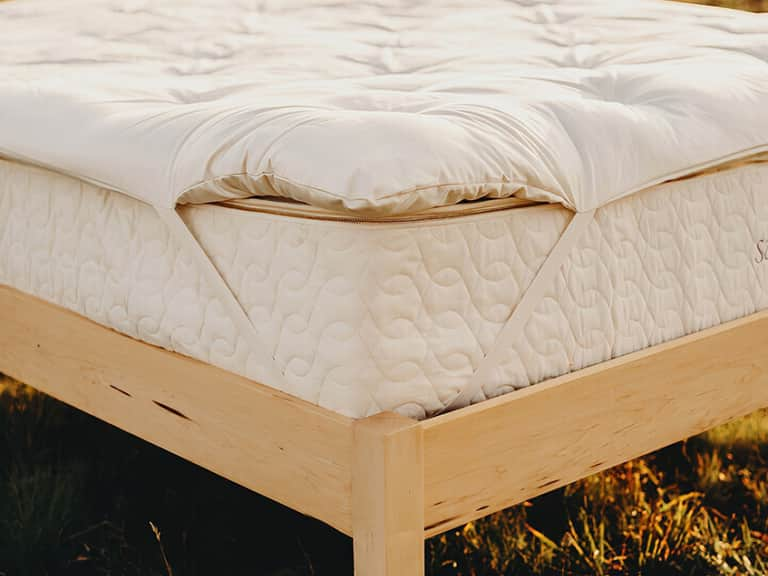
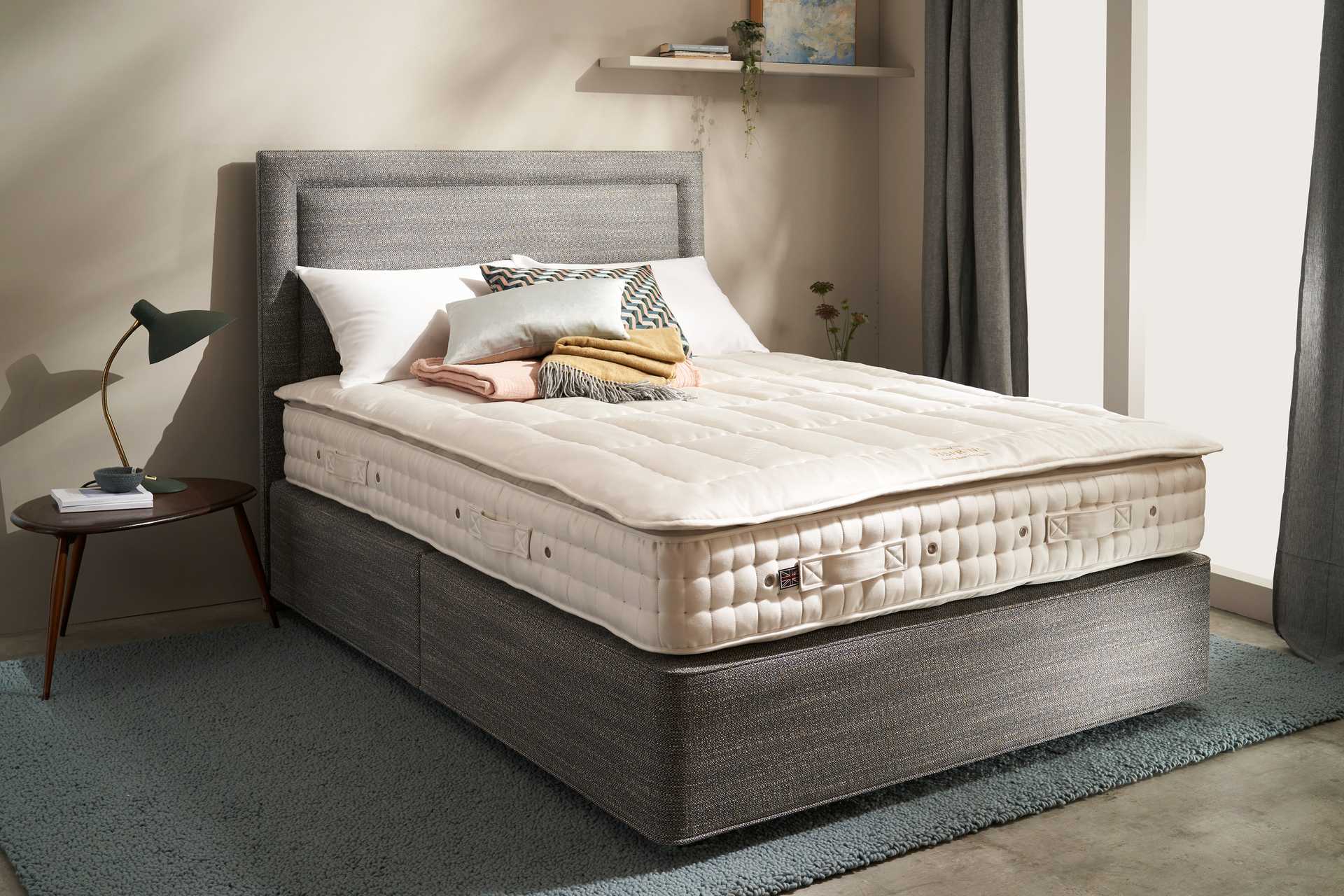
Two mattresses containing natural latex can feel markedly different because construction is a system, not a single ingredient. The latex may appear in one substantial layer or several thinner layers, and the surrounding materials can alter how the mattress cushions, responds, and regulates heat. A natural-fiber cover, for instance, contributes a different surface experience from a dense synthetic quilting layer; the effect depends on the complete design.
Some mattresses use a single latex type throughout, while others combine layers intended to provide different sensations. A softer upper layer may provide more initial cushioning; a firmer layer beneath it may create a steadier base. Some designs allow layers to be rearranged or replaced, but this is not a universal feature. Before assuming a mattress is adjustable, confirm which layers are included and what changes the maker permits.
Construction details worth checking include the thickness of each layer, the materials used in the cover and quilting, and whether adhesives or other foams are present. Ask whether the quoted composition applies to the entire mattress or only to the latex component. Clear, specific answers are more informative than broad descriptions such as “all natural” or “eco-friendly.”
- Layer count and thickness: These influence the balance of surface cushioning and deeper support.
- Material composition: Establish whether the latex is natural, synthetic, or blended, and identify the other layers.
- Cover and quilting: These affect the first touch, airflow, and how directly the latex feel comes through.
- Layer options: Confirm whether firmness can be adjusted and whether separate components are available.
- Foundation compatibility: Check the maker’s requirements for the base, spacing, and support beneath the mattress.
Dunlop and Talalay: two common processes
Natural latex mattress components are often described using the names Dunlop and Talalay, terms referring to different manufacturing processes. Broadly speaking, the process can affect the resulting material’s structure and feel. These names are useful clues, but they should not be treated as an instant comfort ranking: the final experience still depends on the particular formulation, layer design, and mattress as a whole.
With Dunlop processing, latex is poured into a mold and cured. Talalay processing involves additional stages, including expansion in a mold and freezing before vulcanization. You may encounter descriptions that characterize one as denser or the other as more uniform, but individual products and specifications vary. Rather than relying on generalizations, ask how the manufacturer describes the layer’s role and whether a sample or in-person trial is available.
The distinction can be relevant when comparing construction, but it does not replace the more immediate questions: Does the mattress feel comfortable? Does its firmness suit you? Is its material composition clearly documented? Process names are part of the picture, not the final verdict.
Breathability and temperature
Breathability is often part of the conversation around latex. The material’s structure and the way a mattress is built can allow air to move through or around its layers, while covers, quilting, room conditions, and bedding also influence how warm a sleeper feels. It is more accurate to think of temperature as an interaction among the mattress, the bedroom, and the person than as a promise attached to one material.
Latex is sometimes chosen by people seeking an alternative to a more enveloping foam sensation. Its responsive feel may seem less cocooning, but no mattress material can guarantee that a person will sleep cool. A thick quilted cover, a poorly ventilated room, heavy bedding, or individual differences in heat perception can alter the experience. If temperature is a priority, investigate the complete construction and consider the sheet and blanket layers you use, too.
Simple environmental adjustments can matter: keep the bedroom comfortably ventilated, choose sleepwear and bedding appropriate to the season, and avoid over-layering. If overheating is persistent or newly troubling, consider other possible contributors and seek medical advice where appropriate rather than assuming a mattress alone is responsible.
What “organic” means—and what it does not
The word “organic” can refer to the agricultural origin of a raw material, the handling of a textile, or a certified component within a larger product. It does not necessarily establish that every part of a finished mattress is organic. For that reason, certification names, scope, and product documentation are more useful than a headline claim on its own.
For example, a textile certification may address the processing and chemical inputs of a fabric, while a materials or product standard may evaluate a different part of the supply chain. A certification may apply to the cotton cover but not the latex, or to a component rather than the complete mattress. Read the certificate details and check which product, material, or facility it covers. If a maker says a mattress is certified, ask for the exact standard and the relevant scope.
Certifications can help make claims more accountable, but they do not tell you whether a bed will feel comfortable or suit your sleeping position. Nor should an organic label be treated as a substitute for understanding the construction. The most useful assessment combines verified materials information with a realistic evaluation of comfort, durability terms, care, and return policies.
- Look for the full name of the certification, not only a logo or general phrase.
- Check whether it applies to the latex, fabric, finished mattress, or another specific component.
- Review the certification’s current documentation and the product model it identifies.
- Ask for a complete component list, including cover, quilting, fire barrier, and adhesives where relevant.
- Separate environmental or materials claims from comfort claims; one does not prove the other.
Durability, care, and practical details
Latex is valued for resilience, but durability is not something to infer from the material name alone. The quality of the latex, its density and formulation, the construction of the mattress, the foundation beneath it, and everyday use all have a part to play. A long warranty may be reassuring, yet it is worth reading the conditions carefully: coverage can differ from expectations, and ordinary comfort preferences are not necessarily treated as defects.
Before purchasing, review the recommended base and any limits on slat spacing or adjustable frames. A mattress needs suitable support beneath it; using an incompatible foundation may affect performance or warranty coverage. Ask about weight, handling, delivery, setup, and whether the mattress can be rotated. These practical details become particularly important with substantial latex constructions, which may be heavier than expected.
Care instructions vary by cover and design. Do not assume that the mattress itself is washable or that every cover can be removed. Use only the cleaning guidance supplied for the specific model, protect the surface from spills where appropriate, and allow damp materials to dry fully. If you use a mattress protector, check that its fit and construction do not undermine the comfort or temperature qualities you value.
A thoughtful comparison checklist
When comparing natural latex organic mattresses, it is easy to become absorbed in a vocabulary of layers, processes, and certifications. Bring the decision back to a few clear questions. What is the mattress made of, from cover to core? What does it feel like in your usual sleep position? What evidence supports its material claims? And what happens if it is not right for you?
- Describe the feel you want. Decide whether you prefer buoyant responsiveness, close contouring, or a balance between the two.
- Consider your sleep position. Use it as a guide to where you may need cushioning, then test rather than relying on a rule.
- Read the full materials list. Verify the type of latex and identify the cover, quilting, and other components.
- Interpret certifications precisely. Confirm the standard and the scope of the claim.
- Check the trial and return terms. Understand the testing period, fees, pickup arrangements, and condition requirements.
- Review the warranty and foundation guidance. Make sure the support system you have is compatible.
- Compare the whole sleeping setup. Bedding, room temperature, and bed base can change how a mattress feels.
Who might appreciate a latex mattress?
A natural latex mattress may appeal to someone who enjoys a responsive surface, wants cushioning without a strongly sinking sensation, or is looking closely at the materials in a bedroom. It may also suit people who value the possibility of layered construction or want detailed information about the components in their sleep environment. These are preferences, not guarantees of better sleep.
Someone who loves a slow-melting, enveloping feel may prefer another type of mattress, while a person sensitive to the lively push-back of latex may find it takes getting used to. Even within the category, differences between models can be significant. A showroom test, when available, can reveal first impressions, but a home trial may offer a more realistic sense of how a mattress feels across different nights and positions.
Take special care if you have a known latex allergy or related health concern. Product composition and exposure routes can vary, and online descriptions may not answer individual medical questions. Contact the manufacturer for material details and consult a qualified clinician for advice specific to your circumstances.
The quieter luxury of knowing what is beneath the sheets
There is a particular pleasure in a bedroom that feels considered rather than overworked: layers chosen with intention, a surface that welcomes rest, and materials that make sense to the person sleeping there. Natural latex can be part of that picture, bringing a resilient, buoyant quality and a material story worth examining. But no phrase on a label can decide whether a mattress is right for you.
Look beyond the shorthand. Ask how much of the mattress is natural latex, what else is inside it, which certifications apply, and whether the feel supports your own preferred way of sleeping. Weigh those answers against comfort, care, the foundation you own, and the terms that let you test the mattress at home. The most thoughtful choice is not the one with the most impressive vocabulary; it is the one whose construction, claims, and feel hold together under close inspection.